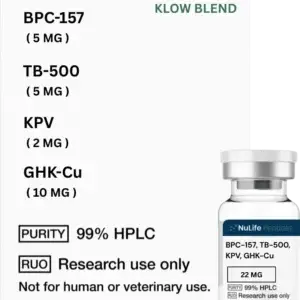
1. BPC-157
Biological Origin:
Derived from a naturally occurring gastric peptide fragment (Body Protection Compound).
Primary Research Focus:
Mechanistic Highlights (Preclinical):
-
Interacts with FAK–paxillin and VEGF-related pathways
-
Modulates NO synthase activity
-
Demonstrates cytoprotective effects in cell and animal models
Why studied:
Used extensively in tissue integrity, wound-healing models, and gastrointestinal biology research.
2. TB-500
Biological Origin:
Synthetic analog of Thymosin Beta-4, a naturally occurring actin-binding peptide.
Primary Research Focus:
-
Actin cytoskeleton dynamics
-
Cell migration and differentiation
-
Angiogenesis and tissue remodeling
Mechanistic Highlights:
-
Binds G-actin, regulating actin polymerization
-
Influences cell motility and structural organization
-
Studied in cardiac, muscular, and connective tissue models
Why studied:
Serves as a model peptide for investigating cytoskeletal regulation and regenerative signaling.
3. KPV
Biological Origin:
C-terminal tripeptide of α-melanocyte-stimulating hormone (α-MSH).
Primary Research Focus:
Mechanistic Highlights:
-
Modulates NF-κB signaling
-
Influences cytokine expression profiles
-
Acts via melanocortin-related immune pathways, largely independent of pigmentation
Why studied:
Favored in gut, skin, and immune research models due to its small size and signaling specificity.
4. GHK-Cu
Biological Origin:
Naturally occurring human plasma tripeptide (Gly-His-Lys) complexed with copper(II).
Primary Research Focus:
-
Gene expression modulation
-
Extracellular matrix (ECM) remodeling
-
Collagen and elastin synthesis pathways
Mechanistic Highlights:
-
Acts as a copper delivery system to cells
-
Influences MMP/TIMP balance
-
Regulates genes involved in wound repair and skin biology
Why studied:
Widely used in dermal biology, anti-aging research, and tissue remodeling studies.
Integrated Research Rationale (Why Combine Them)
In preclinical research, combining these peptides allows investigators to explore:
-
Cytoprotection + structural repair (BPC-157 + TB-500)
-
Inflammation control (KPV)
-
ECM and gene regulation (GHK-Cu)
-
Multi-pathway signaling synergy in tissue models
This makes the KLOW Blend attractive for systems-level research into tissue resilience, repair signaling, and inflammatory balance.