1. Ligand–Receptor Interaction
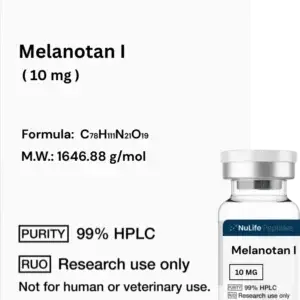
Melanotan I (MT-I) is a synthetic linear analog of α-melanocyte-stimulating hormone (α-MSH).
In preclinical systems, it acts as a high-selectivity agonist of the melanocortin-1 receptor (MC1R), a Gs-coupled GPCR expressed predominantly on melanocytes and certain immune cells.
This receptor selectivity defines MT-I’s localized, skin-focused signaling profile.
2. Primary Signal Transduction: Gs → cAMP
Upon MT-I binding to MC1R:
-
Gs protein activation
-
Stimulation of adenylyl cyclase
-
Elevation of intracellular cAMP
-
Activation of protein kinase A (PKA)
This Gs–cAMP–PKA axis is the dominant mechanistic pathway triggered by Melanotan I.
3. Nuclear Transcriptional Activation
Activated PKA phosphorylates CREB (cAMP response element-binding protein), which:
MITF upregulates expression of melanogenic enzymes:
-
Tyrosinase (TYR)
-
TYRP-1
-
TYRP-2
➡ Functional outcome: increased melanogenesis with a bias toward eumelanin synthesis.
4. Melanin Type Modulation
MC1R activation by Melanotan I shifts melanocyte activity:
Eumelanin has greater:
This mechanistic shift is a core focus in photobiology and oxidative stress research.
5. Secondary Signaling & Crosstalk
In addition to canonical cAMP signaling, MC1R activation by MT-I has been shown in preclinical models to influence:
-
MAPK / ERK pathways (cell survival, differentiation)
-
PI3K–Akt signaling (stress response modulation)
-
NF-κB inhibition (anti-inflammatory signaling)
These effects are context-dependent and vary by cell type and experimental conditions.
6. Immune & Anti-Inflammatory Signaling
MC1R is also expressed on:
-
Macrophages
-
Dendritic cells
-
Keratinocytes
MT-I–mediated MC1R activation in immune cells has been associated with:
-
Reduced pro-inflammatory cytokine expression
-
Enhanced anti-inflammatory signaling
-
Modulation of innate immune responses
This has made MT-I useful in in-vitro inflammation and immunomodulation studies.
7. Limited Central Nervous System Engagement
Due to:
Melanotan I exhibits minimal CNS melanocortin signaling in preclinical research, in contrast to Melanotan II.
This mechanistic distinction:
-
Limits MC3R/MC4R activation
-
Reduces confounding neuroendocrine effects
-
Supports its use in peripheral-only signaling models
Mechanistic Summary (Signal Flow)
Melanotan I → MC1R binding → Gs activation → ↑ cAMP → PKA activation → CREB phosphorylation → ↑ MITF → ↑ melanogenic enzyme transcription → enhanced eumelanin production